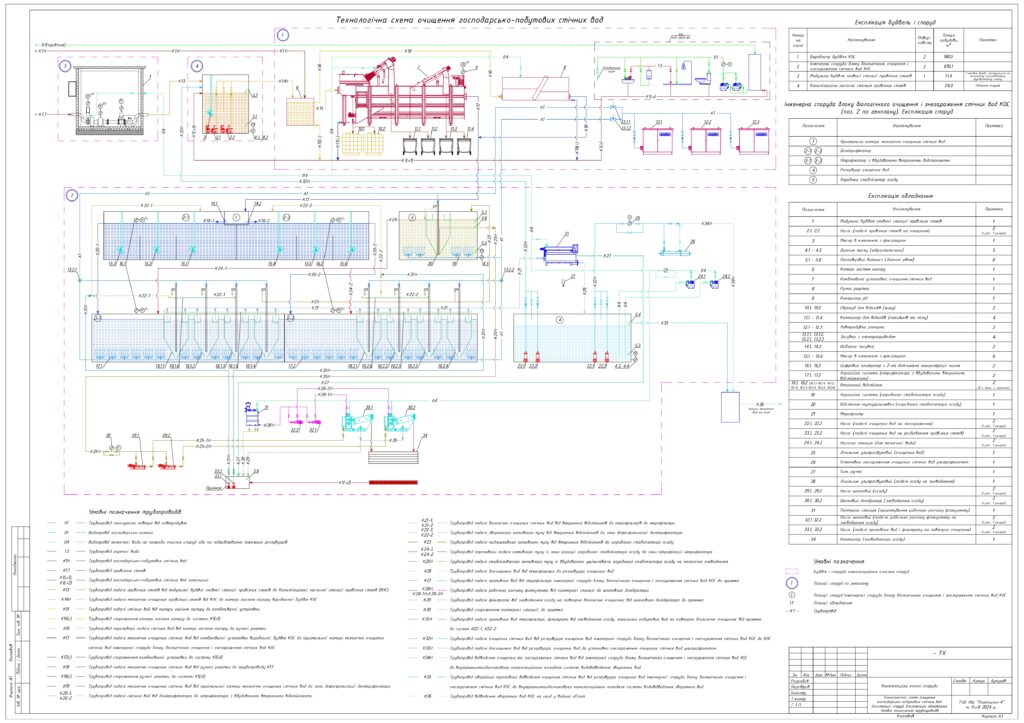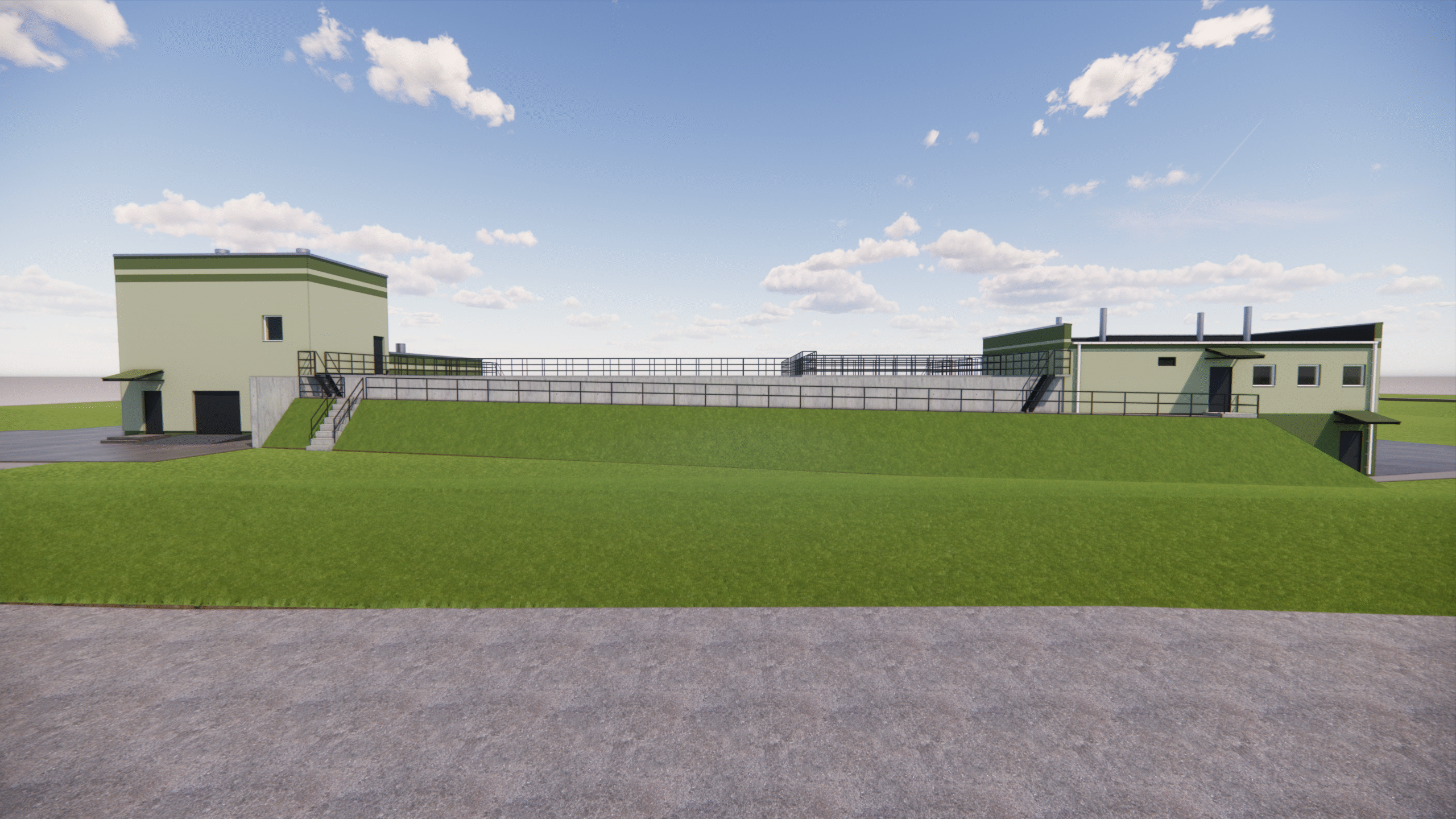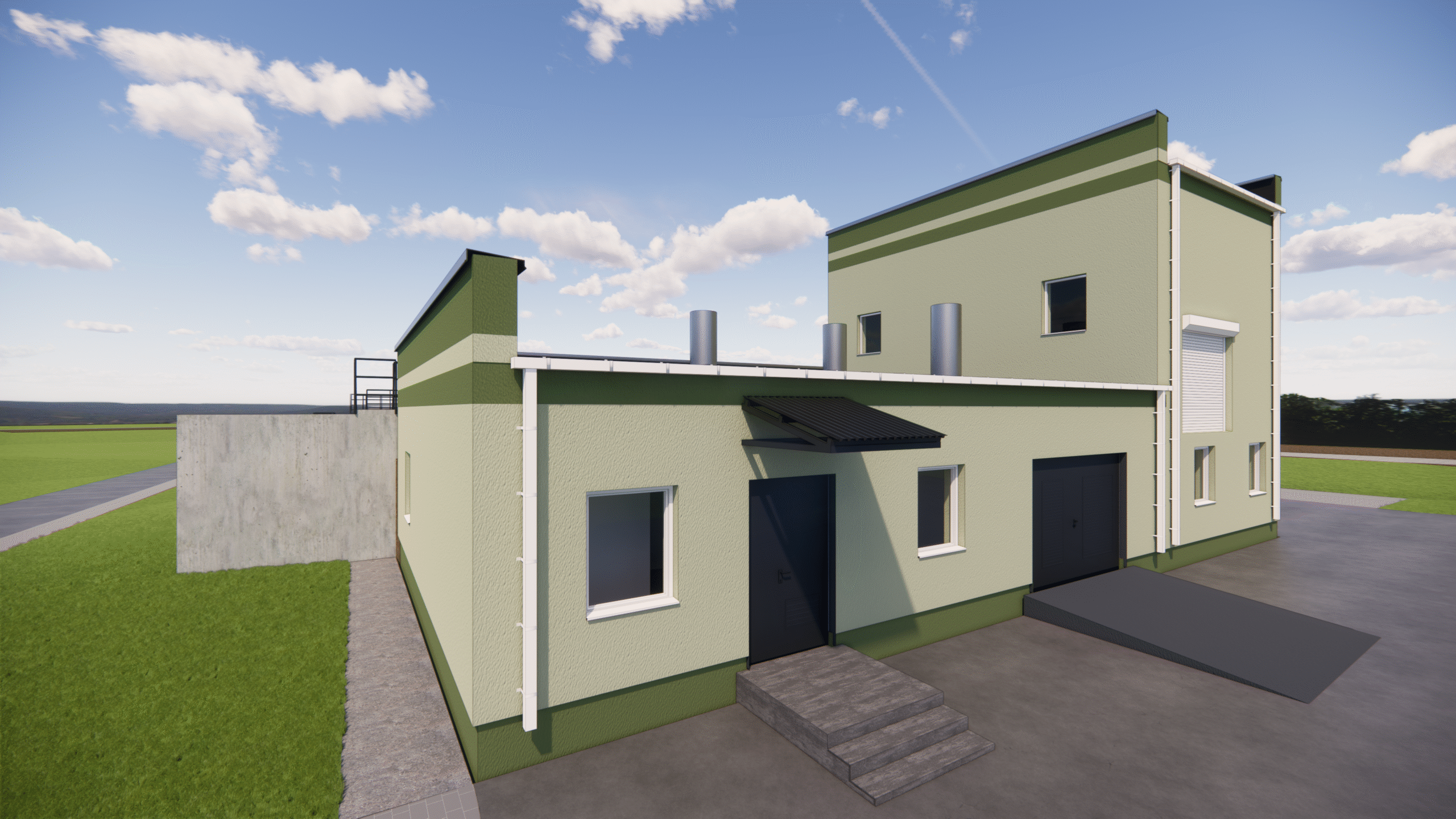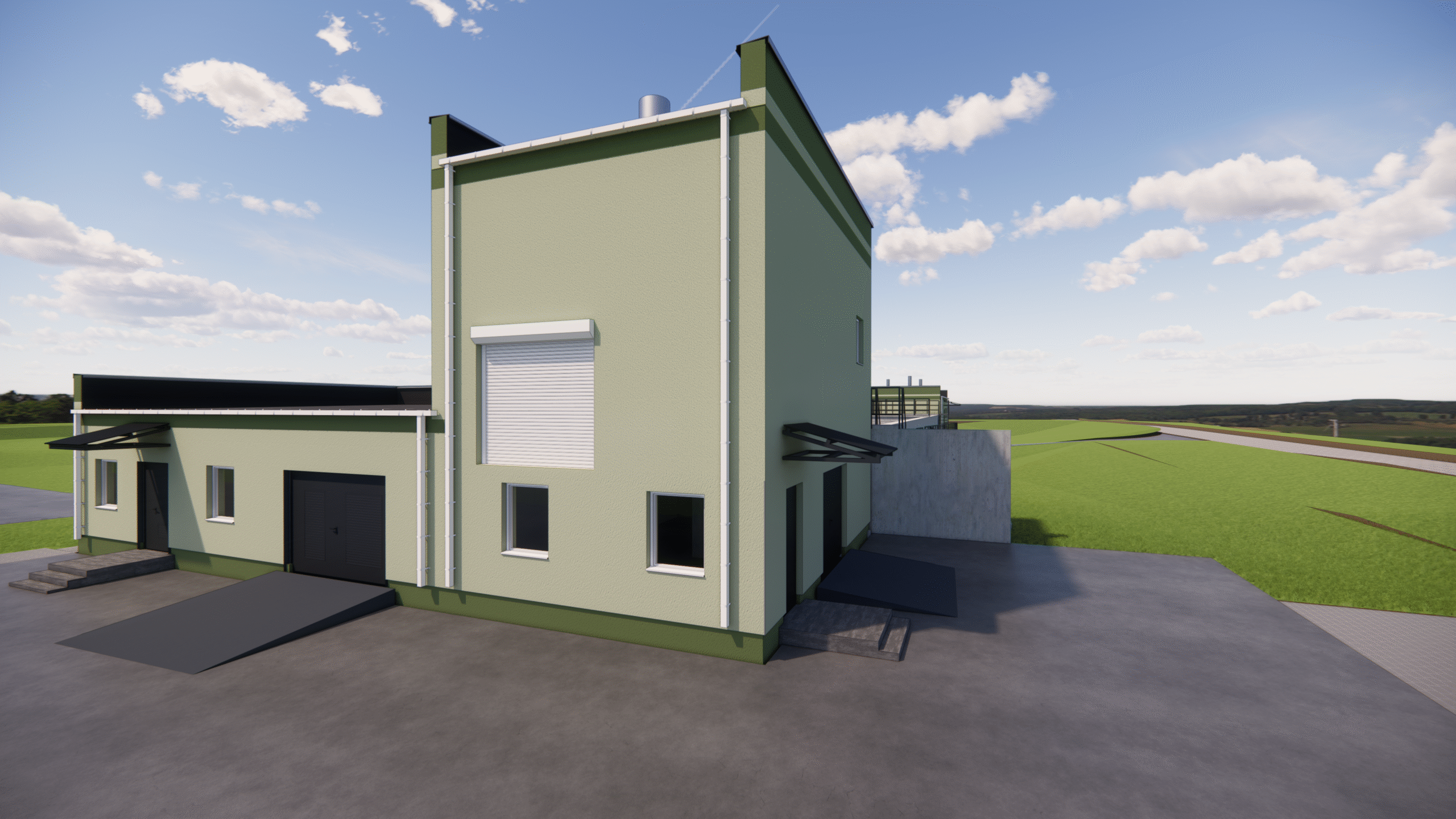
Sewage treatment plants (STP): purpose and technological process
General characteristics
Sewage treatment plants (STPs) are designed to treat wastewater that enters the centralized drainage system of a settlement and wastewater from sewage transport.
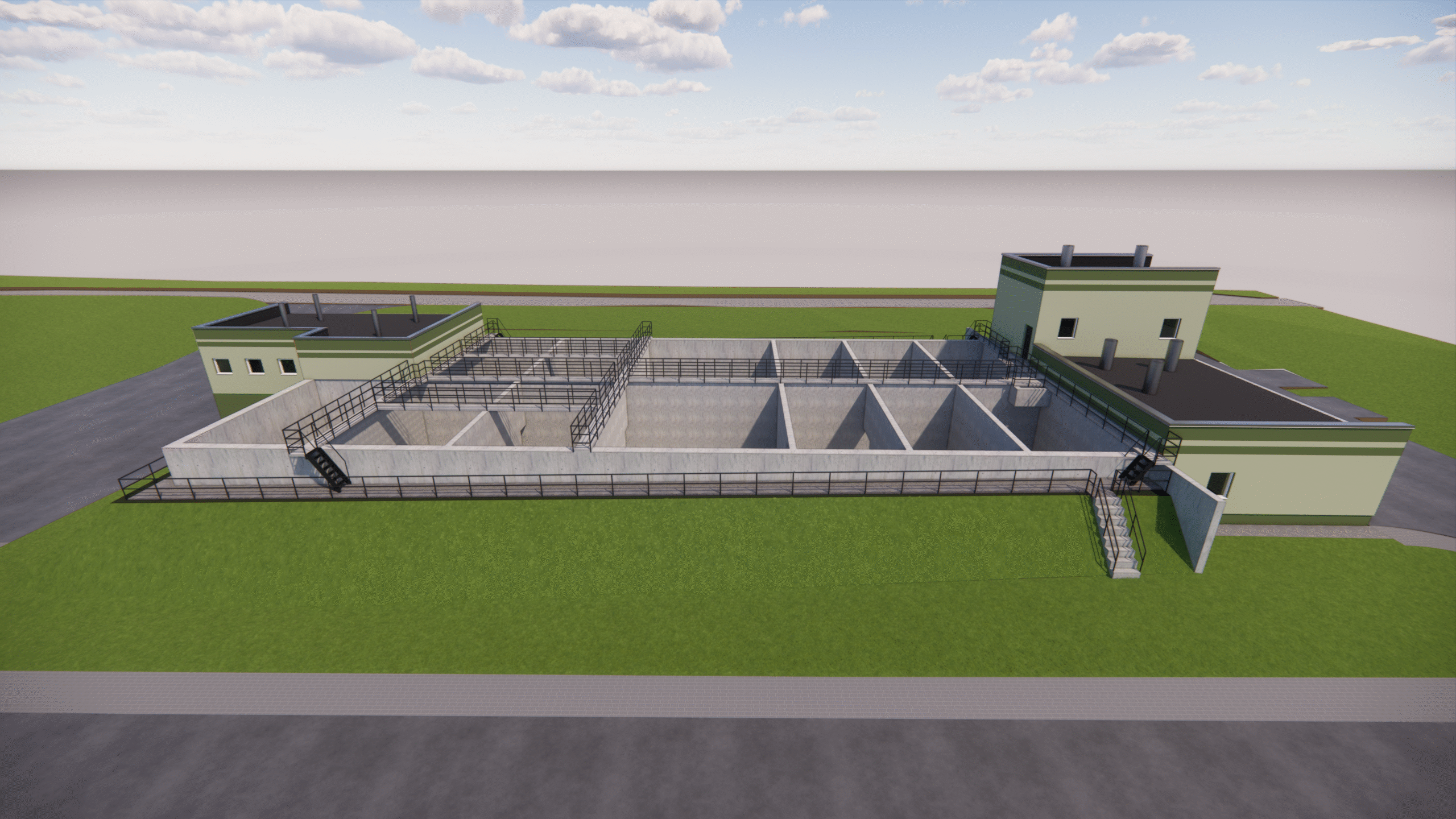
Domestic wastewater treatment plants include the following units:
- imported wastewater reception unit;
- mechanical cleaning unit for coarse waste, sand and grease on a combined installation;
- complete biological treatment unit using a dephosphorizer, denitrifier, nitrifier and secondary settling tank;
- microfilter post-treatment unit;
- ultraviolet disinfection unit for purified water;
- aerobic stabilization and mechanical sludge dewatering unit.
Wastewater inflow
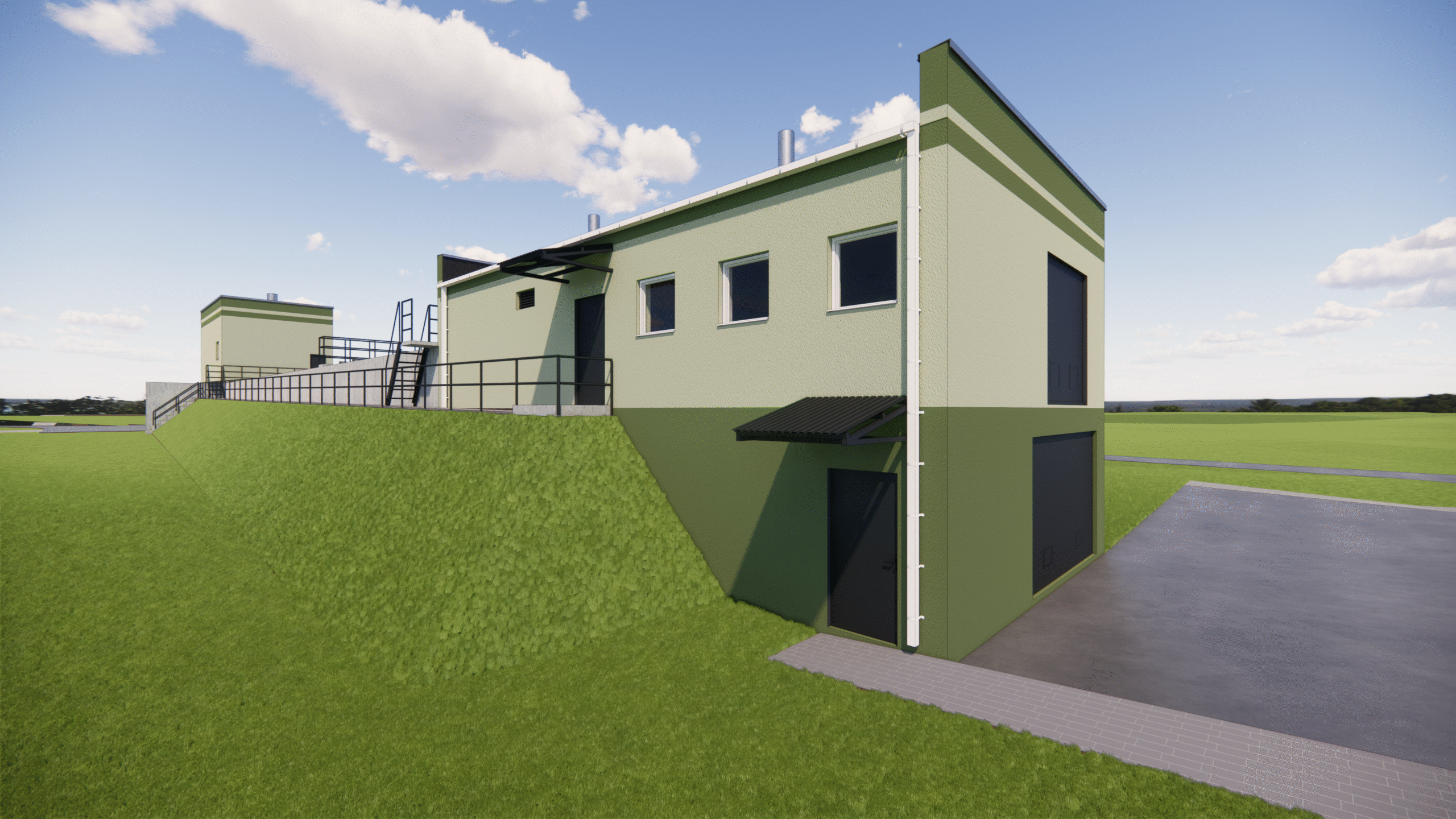
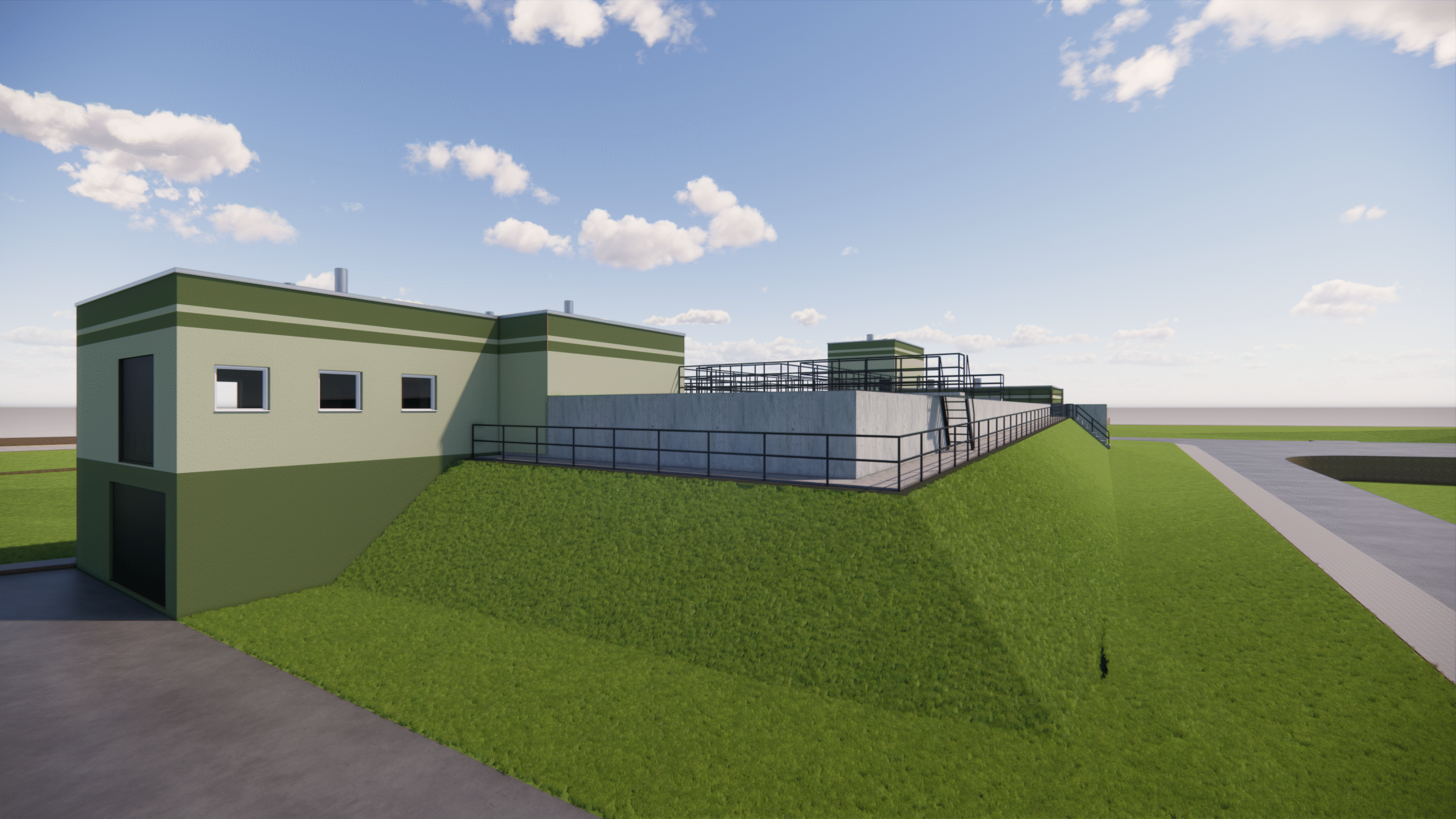
Wastewater from the centralized wastewater system enters the KOS Production Building under pressure, namely into the pressure quenching chamber.
Wastewater brought to the wastewater treatment plant by sewage transport enters the Modular Building of the wastewater discharge station, equipped with equipment for mechanical wastewater treatment, wastewater metering, and measuring the pH and redox potential of wastewater.
Mechanically treated imported wastewater enters the Sewage Pumping Station (SPS) for imported wastewater, where technical water (wastewater treated at the STP) is automatically supplied for their dilution.
From the sewage treatment plant, wastewater is pumped by pumps based on signals from level sensors to the KOS Production Building for treatment, namely, to the pressure quenching chamber.
Mechanical cleaning
From the pressure quenching chamber, wastewater flows by gravity into a combined wastewater treatment plant, where it is mechanically treated:
- removal of solid impurities larger than 5 mm;
- sand separation and removal;
- fat separation.
The removed waste is sorted into separate containers – containers and Euro cubes.
A bypass line is provided from the pressure quench chamber to the manual grate in case of service or repair of the combined unit.
A pH controller is provided on the mechanically treated wastewater pipeline.
Mechanically treated wastewater from the production building of the WWTP flows by gravity to the Engineering Building of the WWTP's biological treatment and disinfection unit, namely to the receiving chamber.
Biological treatment
From the receiving chamber, wastewater is distributed through gate valves into two parallel biological wastewater treatment lines.
Wastewater flows sequentially into the following zones:
- biological
- dephosphoration;
- denitrification;
- nitrification;
- advocacy.
In denitrifiers, anaerobic conditions are maintained, and the mass exchange of the sludge-water mixture is provided by mixers. In nitrifiers, aerobic conditions are maintained. Wastewater treatment is carried out using the vital activity of activated sludge microorganisms.
In secondary settling tanks, the activated sludge-water mixture is separated into the “purified water” / “sludge” phases.
Secondary clarifiers are equipped with airlift and toothed collector systems. Airlifts feed the return activated sludge to the dephosphoration zone, and excess activated sludge to the aerobic sludge stabilizer.
Aeration system
For the needs of the biological wastewater treatment process, air is supplied from rotary blowers installed in the production building of the wastewater treatment plant.
A system for regulating the air flow using electrically driven dampers based on signals from digital controllers with two oxygen concentration sensors is provided.
The controllers also control the speed of the rotary blowers, which provides energy savings.
Cleaning and disinfection
Purified water from secondary settling tanks is fed for further purification into a microfilter, which is equipped with an automatic flushing system based on signals from the complete level sensors.
The washing water from the microfilter is diverted for repeated biological treatment.
Purified water from the microfilter flows into the purified water tank, from which it is pumped through an ultrasonic meter to the ultraviolet disinfection unit for purified wastewater.
Sludge treatment
Aerobically stabilized sludge, based on signals from level sensors, is fed by screw pumps through an ultrasonic meter for mechanical dehydration to screw dehydrators, where a working solution of flocculant is fed by dosing pumps.
The dewatered sludge is unloaded into a container (trailer) and periodically removed.
The filtrate from the screw dehydrators is returned for repeated biological treatment.
Water reuse and discharge
The treated water is reused directly at the wastewater treatment plant:
- for diluting imported wastewater;
- for technological needs;
- for washing equipment;
- for preparing a working flocculant solution.
The treated and disinfected return water is discharged from the Engineering Structure of the Biological Treatment and Disinfection Unit of the Wastewater Treatment Plant for discharge into a water body.