
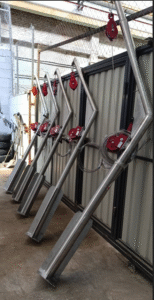
Lifting mechanisms are an integral part of modern wastewater treatment plants. They provide lifting, moving and installation of technological equipment, and are also used during maintenance and repair. Without such mechanisms, the operation of structures would be significantly complicated, especially considering the large weight of pumps, grates, mixers and other elements.
The main purpose of lifting mechanisms is ensuring safe and efficient access to equipment, which is located in hard-to-reach places (reservoirs, canals, wells).
1. Overhead cranes
Gantry cranes are widely used in pumping stations and engine rooms. They allow heavy equipment to be moved horizontally and lifted to the required height.
Advantages:
2. Electric hoists (telphers)
These are compact lifting devices that are often installed on monorails or crane beams.
Features:
Used for dismantling pumps, mixers, and cleaning equipment.
3. Winches
Winches are used to lift equipment or tools vertically, especially in narrow mines and wells.
Advantages:
Often used when servicing grates and sand traps.
4. Mobile lifting devices
These include portable cranes, tripods, and other temporary structures.
Application:
For use in wastewater treatment plants, the equipment must meet the following requirements:
Special attention is paid to materials - stainless steel or special anti-corrosion coatings are often used.
The operation of lifting mechanisms at wastewater treatment plants has its own nuances:

Untimely maintenance can lead to accidents and equipment downtime. Lifting mechanisms play a key role in the operation of wastewater treatment plants, ensuring effective maintenance and repair of equipment. The smooth operation of the entire wastewater treatment system depends on the correct choice of the type of mechanism and its technical condition.