
AMCON sludge screw dehydrator

AMCON sludge screw dehydrator

Advantages and features of the screw dehydrator:

  • The screw dehydrator is designed to dehydrate any type of sediment formed during the wastewater treatment process (domestic, industrial, agricultural, etc.)
  • The unit is designed for dewatering sludge with a suspended solids concentration of 2000 mg/l to 35000 mg/l. The dewatered sludge has a humidity of 75% or less, depending on the composition of the wastewater.
  • The unit has a built-in thickening zone, which eliminates the need for additional sludge thickening equipment (sludge compactor) and allows dewatering of sludge with a low concentration of suspended solids (from 2000 mg/l)
  • The dehydrator has a design that prevents the drum from clogging, thus eliminating the need for large volumes of wash water.
  • The unit does not have any high-load and high-speed components, which indicates the reliability of the design. The dehydrator is characterized by low noise and vibration levels.
  • The unit consumes an order of magnitude less electricity than any other dehydration systems.
  • The small dimensions and weight of the screw dehydrator allow for compact placement of the unit at wastewater treatment plants.
  • The installation operates in automatic mode and does not require the constant presence of maintenance personnel.

Construction

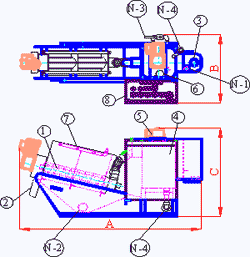
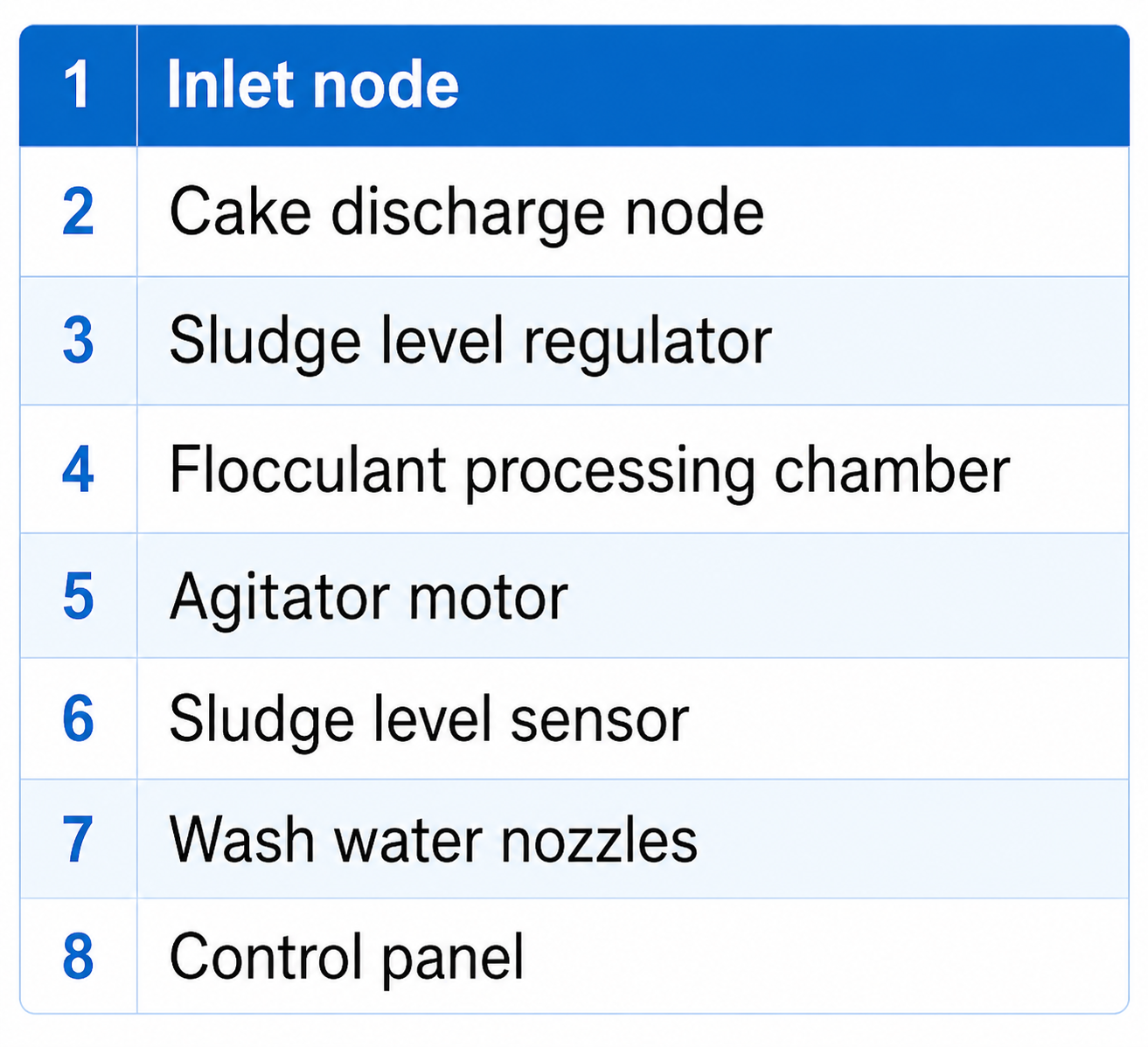
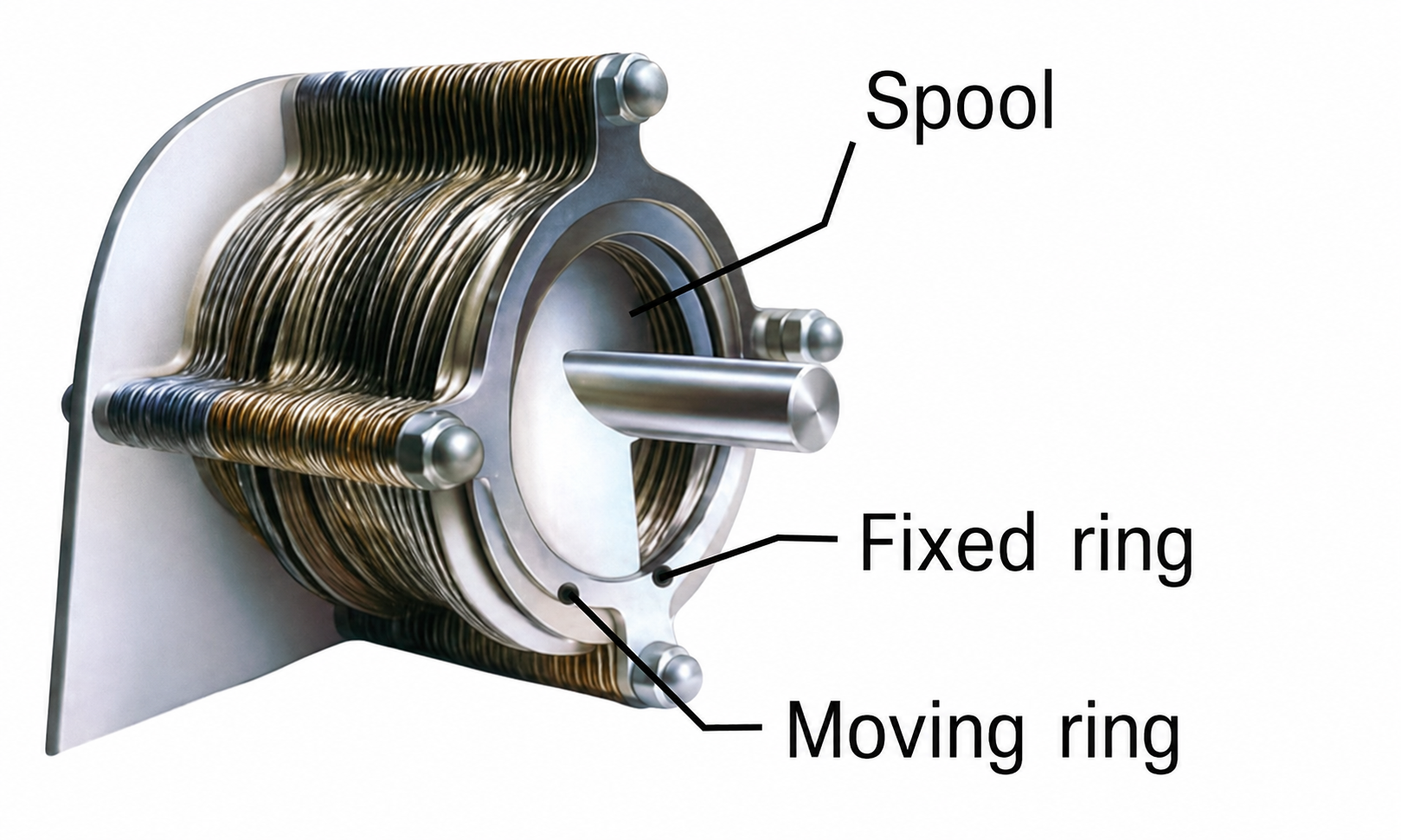
The dewatering unit consists of a screw rotating at a constant speed between fixed rings, movable rings and gaps. The screw moves the rings between the gaps and thus prevents the drum from clogging.
Dehydration principle

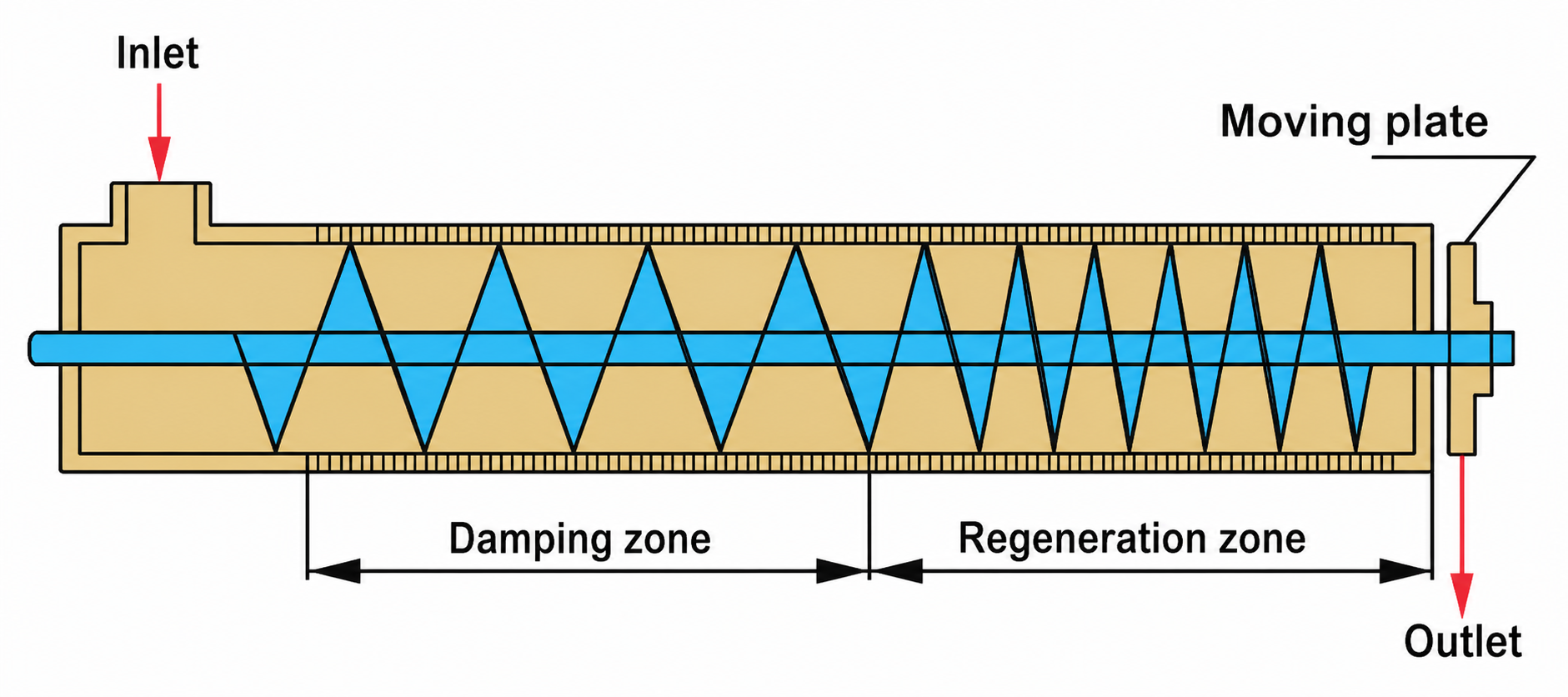
After treatment with flocculant, the sediment is fed to the dewatering unit. During the dewatering process, the filtrate flows out of the gaps between the rings. The width of the gaps decreases in the direction of the cake outlet. In the thickening zone, it is 0.5 mm; in the dewatering zone, it narrows from 0.3 mm to 0.15 mm. The pitch of the screw turns also decreases, creating pressure in the dewatering zone, while the volume of the sediment decreases. A pressure plate is installed at the end of the screw, which regulates the internal pressure in the drum

Dehydration scheme

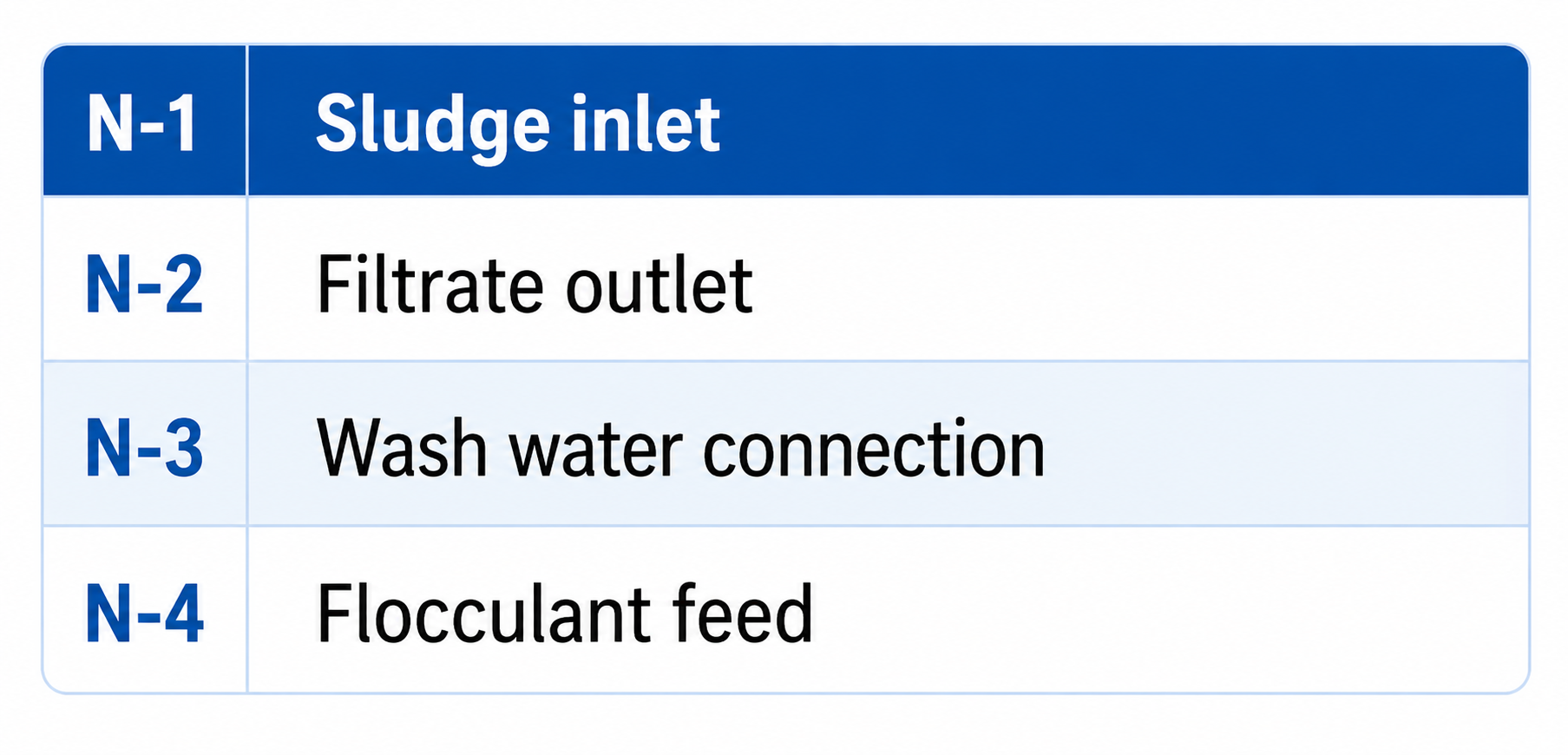
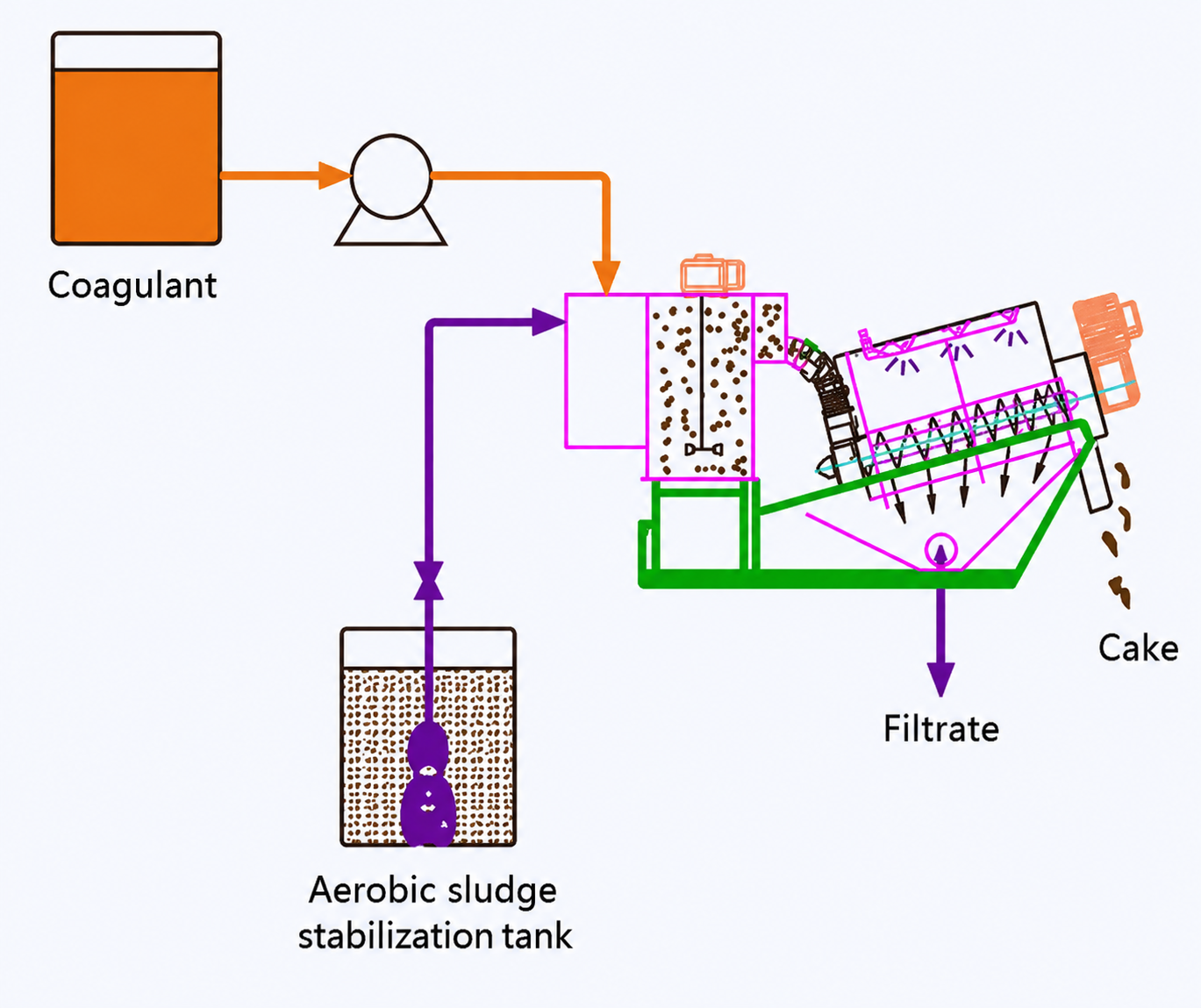
The unit operates automatically using level sensors or a timer. The stabilized sludge is pumped to the flocculant treatment section, then the sludge is sent to the dewatering unit.
The cake is dumped into a container, and the filtrate goes to the head of the treatment plant.

Dehydration principle

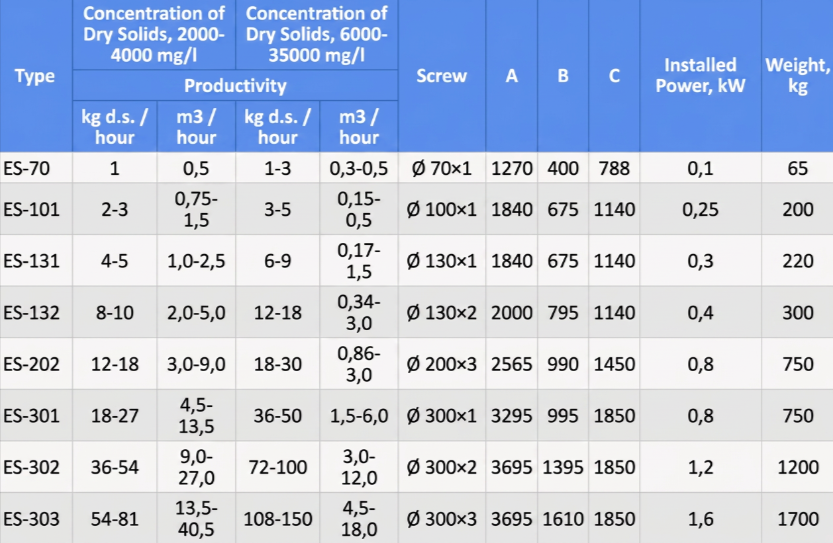
  • The plant's productivity varies depending on the type of sludge.
  • Technical parameters may be changed depending on the technical specifications
  • dry matter – dry matter    
  • suspended solids

Equipment

Needed
help?